
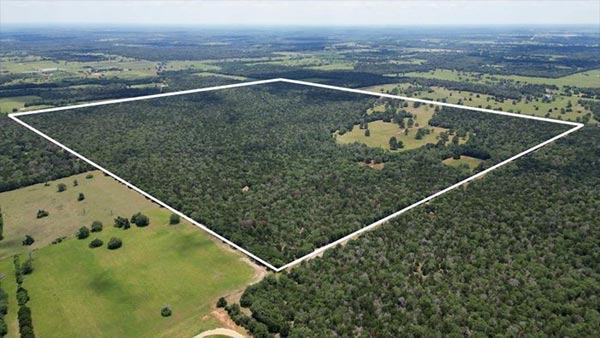
If you are wondering how big 300 acres really is, the short answer is: 300 acres equals 13,068,000 square feet, or about 1,214,057 square meters.
That is a surprisingly large amount of land. To make the size easier to visualize, 300 acres is roughly equivalent to 227 American football fields, depending on whether you include the end zones and how the comparison is measured.
But numbers alone do not always make land size easy to understand. Comparing 300 acres with familiar places, sports fields, and everyday spaces can make the scale much clearer.
How Many Square Feet Is 300 Acres?
One acre contains 43,560 square feet.
So the calculation is:
300 × 43,560 = 13,068,000 square feet
That means 300 acres contains more than 13 million square feet of land.
For someone looking at a property listing, that number can be difficult to visualize. A more practical way to understand it is to compare the acreage with familiar landmarks and spaces.
How Many Square Meters Is 300 Acres?
One acre is approximately 4,046.86 square meters.
Therefore:
300 acres ≈ 1,214,057 square meters
In metric terms, 300 acres is therefore about 1.21 square kilometers.
That makes it a substantial area for a single property or land development project.
How Many Football Fields Is 300 Acres?
A standard American football field, including its end zones, covers approximately 1.32 acres.
Using that comparison:
300 acres ÷ 1.32 ≈ 227 football fields
So you could fit roughly 227 American football fields into 300 acres.
The exact comparison can vary depending on the dimensions used, but the important takeaway is that 300 acres represents a very large expanse of land.
How Long and Wide Is 300 Acres?
An acre measures area rather than length, so 300 acres does not have one fixed shape.
For example, 300 acres could theoretically form a square measuring approximately:
3,624 feet × 3,624 feet
That is roughly:
0.69 miles × 0.69 miles
However, the same 300 acres could also be arranged as a long, narrow parcel.
For example, a property might be 1,000 feet wide and approximately 13,068 feet long. Both parcels would contain the same amount of land.
This is why acreage tells you the total area but not necessarily the property’s dimensions or shape.
Is 300 Acres Considered a Lot of Land?
Yes. In most everyday contexts, 300 acres would be considered a very large property.
For comparison, a typical residential lot is often measured in fractions of an acre. A 300-acre property therefore contains hundreds or even thousands of times more land than many individual residential lots.
The size also makes 300 acres potentially suitable for a wide variety of uses, depending on zoning, local regulations, terrain, infrastructure, and the property’s location.
Possible uses can include:
- Agriculture
- Ranching
- Forestry
- Residential development
- Recreation
- Conservation
- Commercial development
- Mixed-use projects
Not every 300-acre parcel can be used for all of these purposes. Land-use regulations and physical characteristics can significantly affect what can actually be developed.
How Does 300 Acres Compare With a City Block?
City blocks vary dramatically in size, so there is no universal conversion.
In some urban areas, a city block may occupy only a few acres, while blocks in other locations can be considerably larger.
That means 300 acres could represent dozens of city blocks in some areas.
This comparison also highlights why location matters. Three hundred acres in a dense urban environment can have a completely different economic and practical significance from 300 acres of rural farmland.
How Much Land Is 300 Acres in Perspective?
A useful way to think about 300 acres is to move between different units:
| Measurement | Approximate Size |
|---|---|
| Acres | 300 |
| Square feet | 13,068,000 |
| Square meters | 1,214,057 |
| Square kilometers | 1.21 |
| Square miles | 0.47 |
| American football fields | ~227 |
These figures make it easier to translate acreage into measurements that are more familiar.
Could 300 Acres Be Used for a Neighborhood?
Potentially, yes, although the answer depends heavily on local planning and zoning regulations.
A 300-acre parcel could theoretically contain a substantial residential development. But the entire property would not necessarily be available for houses.
Developers may need to allocate land for:
- Roads
- Sidewalks
- Parks
- Drainage
- Utilities
- Schools or community facilities
- Open space
- Commercial areas
- Infrastructure
The number of homes that could ultimately be built therefore depends on factors such as zoning density, minimum lot sizes, environmental restrictions, and infrastructure requirements.
What Could 300 Acres Look Like?
The appearance of 300 acres can vary enormously.
It could be a large agricultural field stretching toward the horizon, a wooded property, rolling countryside, a combination of fields and forests, or a planned development.
Two properties can contain exactly 300 acres while looking completely different.
Terrain also affects how large land feels. Flat open land can make an area appear enormous, while heavily wooded or mountainous terrain can make the same acreage feel more compact.
Why Acreage Can Be Misleading
When people see a number like 300 acres, they may assume they immediately understand the property’s size.
But acreage only describes area.
It does not tell you:
- The property’s exact dimensions
- Whether the land is flat or steep
- How much is usable
- Where roads are located
- Whether utilities are available
- What zoning permits
- How much of the property is environmentally restricted
- Whether the land is divided into multiple parcels
For real estate decisions, these details can be just as important as the acreage itself.
The Short Answer: How Big Is 300 Acres?
If you only need the quick answer:
300 acres equals 13,068,000 square feet, approximately 1.21 million square meters, or about 1.21 square kilometers.
It is also roughly comparable to 227 American football fields.
In practical terms, 300 acres is a very large parcel of land. Its actual usefulness and value, however, depend on location, zoning, terrain, infrastructure, and the intended purpose of the property.
So if you see a property advertised as having 300 acres, don’t think of it as simply a large backyard. Think of an area potentially covering more than a square kilometer—large enough for agriculture, recreation, conservation, or potentially substantial development, subject to local rules.
Leave a Reply