
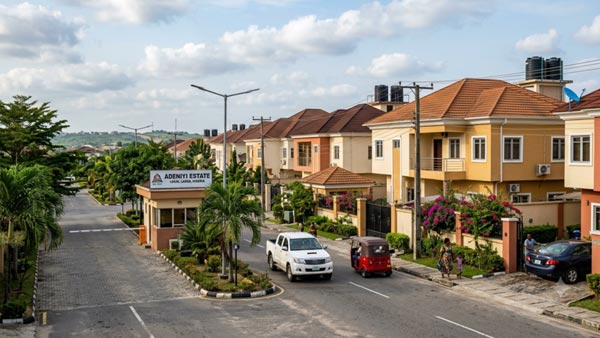
Deciding between raw land and a finished property in Nigeria comes down to your financial goals, cash flow preferences, and timeline. Both options offer strong paths to wealth creation, but they serve different investment strategies.
Core Comparison
- Upfront Capital: Land requires significantly lower entry capital, making it accessible for early-stage investors. Finished properties require substantial upfront capital or financing, as you pay for the location, structure, and developer profit margin.
- Immediate Cash Flow: Finished homes generate immediate passive income through residential or short-let rentals. Land produces zero rental yield until developed or resold.
- Construction Risk: Building from scratch exposes you to material price inflation, contractor delays, and approval overhead. Buying a finished property eliminates construction hassle entirely.
- Capital Appreciation: Well-located land in emerging urban corridors (such as Ibeju-Lekki, Epe, or Lugbe) often appreciates at a much higher percentage rate than established finished buildings.
Property Evaluation Matrix
| Factor | Buying Land | Buying a Finished Property |
| Primary Advantage | High long-term growth, low entry barrier | Immediate move-in or rental cash flow |
| Holding Overhead | Minimal maintenance costs | Repairs, tenant management, and updates |
| Customization | Full control over design and build quality | Fixed floor plan and existing build standard |
| Timeline to ROI | Medium-to-long-term (3 to 10+ years) | Immediate (Day 1 rental yield) |
Decision Framework
- Buy Land If: You have limited starting capital, want to build wealth over 5+ years through land banking, or desire a custom-designed home built at your own financial pace.
- Buy a Finished Property If: You require immediate housing, prioritize predictable rental yields, or wish to avoid the time commitment and cost risks of managing a construction project.
Leave a Reply